From Career Opportunities to AML and Spectrum Analysis – UKE Szczecin Experts Visit ZUT (West Pomeranian University of Techno
09 april 2026
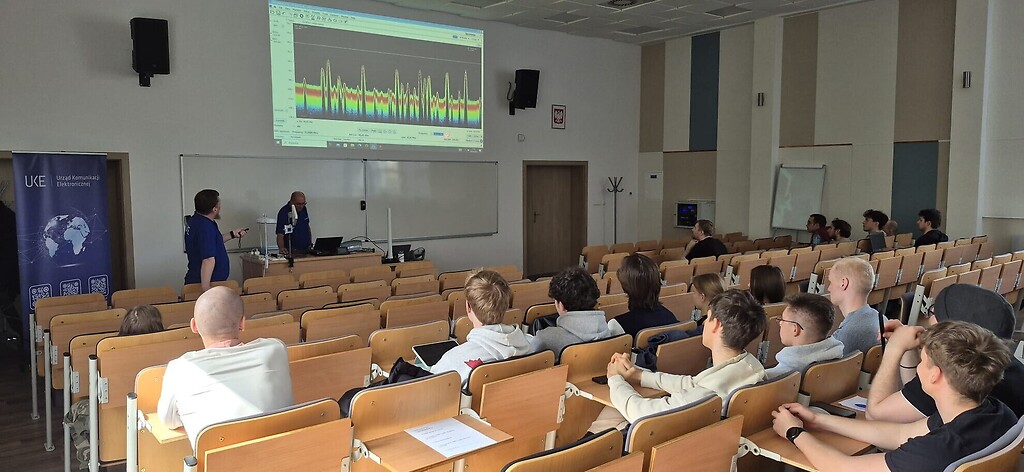
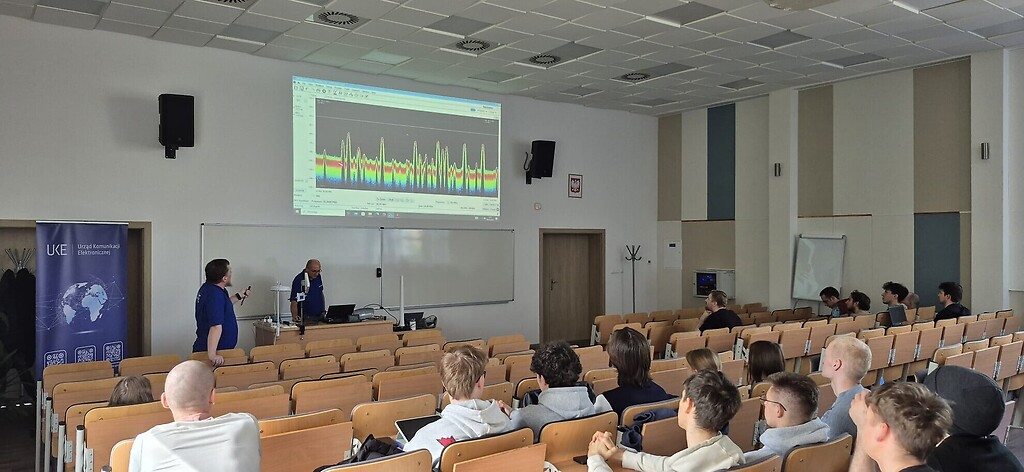
On 8 April, representatives of the UKE Branch Office in Szczecin met with students from the Faculty of Electrical Engineering at the West Pomeranian University of Technology (ZUT). The meeting, which lasted more than two hours, had a dynamic format and was divided into three key parts, giving participants a comprehensive insight into the work of the national regulatory authority.
Part 1: UKE as a Modern Employer. The meeting began with a presentation by Wojciech Rymer, Director of the Branch Office, who introduced students to UKE as a stable and technologically advanced workplace. He discussed career paths, internship opportunities, and the role of engineers within the telecommunications administration.
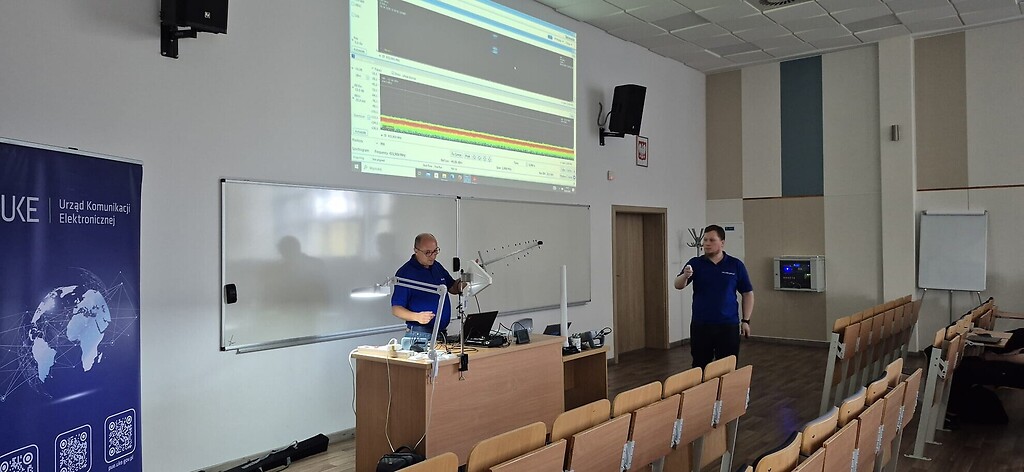
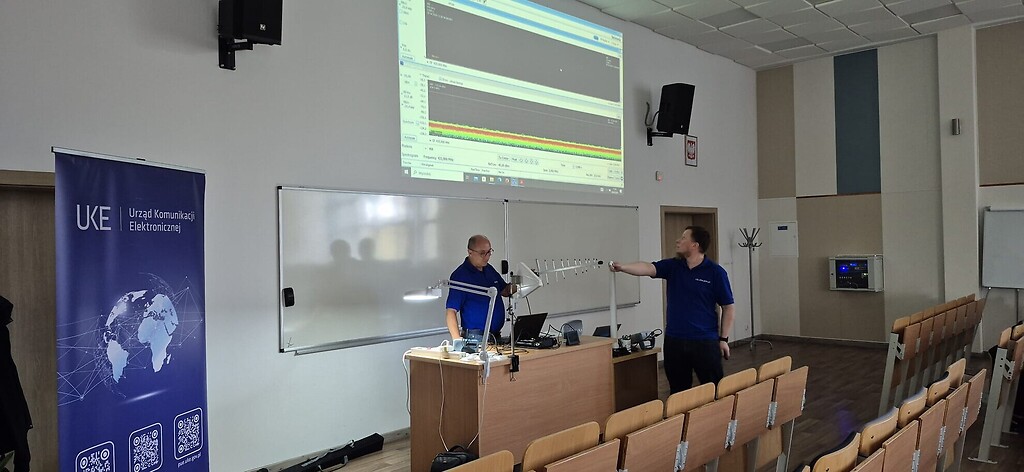
Part 2: Radio in Practice – Spectrum Measurement Workshops. In the second part of the event, Dariusz Buchowski and Marcin Wawrowski, Senior Specialists at UKE, delivered a live demonstration using professional spectrum monitoring equipment, including R&S PR100 and RSA spectrum analyzers. Students were able to observe in real time how electromagnetic interference is generated in the FM broadcast band as well as in the 433 MHz and 900 MHz frequency bands. Common household devices—including an LED lamp, a switched-mode power supply, an amplifier and a DVB-T antenna—served as sources of interference during the demonstration. The workshop clearly illustrated the importance of electromagnetic compatibility (EMC) and showed how unwanted emissions and radio-frequency noise can negatively affect telecommunications services and spectrum use
Part 3: Q&A Session – No Question Too Difficult
The final and longest part of the meeting was an open question-and-answer session. For more than an hour, students engaged UKE experts in discussions covering a wide range of topics related to the Office’s activities, including:
- Safety systems: Advanced Mobile Location (AML) and its role in emergency services.
- Resource management: the Central Database (CBD), radio licensing, and numbering resources.
- Supervision and regulation: interventions involving telecommunications operators, postal market oversight, and alternative dispute resolution (ADR) procedures.
- Examinations and certifications: radio operator certificates and technical requirements for radio spectrum users.
The high quality of the questions demonstrated the students’ strong technical background and genuine interest in telecommunications regulation. It was clear that topics such as AML and spectrum management were already familiar to many of them.
Thank you for your active participation!