Meeting with Consumers in Biała Podlaska
18 december 2025
The pre-Christmas period is a time of joyful preparations and shopping frenzy, but unfortunately, it is also a time of increased activity by cybercriminals. The rush and overload of responsibilities naturally lower our vigilance — something fraudsters are quick to exploit.
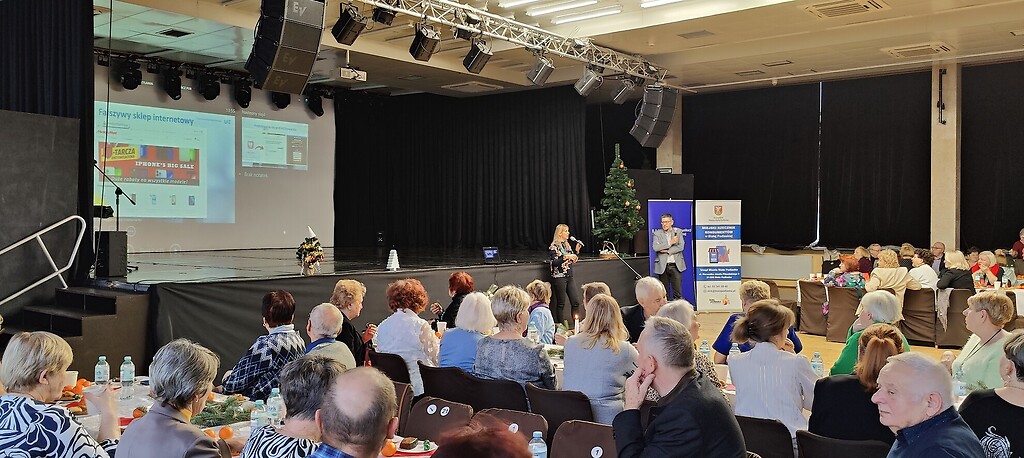
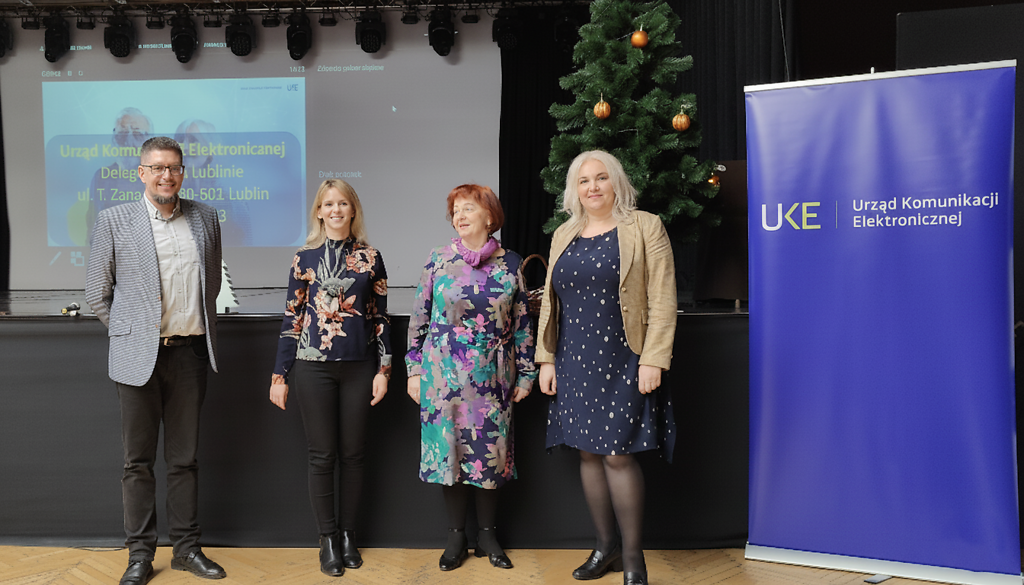
In response to these threats, on December 16, at the invitation of the Municipal Consumer Ombudsman in Biała Podlaska and the Regional Branch of the Polish Association of Pensioners, Retirees and Disabled Persons, an educational meeting was held. Experts from the Lublin Regional Office of UKE – Anna Ligęska-Korol and Arkadiusz Kozłowski – delivered a lecture aimed at equipping seniors and consumers with the knowledge necessary to use modern technologies safely.
During the meeting, the most common manipulation techniques and the principles of safe use of electronic communication devices were discussed in detail:
- Verification of online stores: Experts explained how to distinguish a legitimate e-shop from a fake website. They emphasized the importance of checking for a store’s terms and conditions and full contact details. Participants were warned against offers with suspiciously low prices.
- “BLIK” scam: The mechanism of taking over social media accounts and sending loan requests to friends was discussed. The key rule: always verify such a request by phone before sharing any code.
- Fake notifications from mObywatel: A new scam method was presented, involving SMS messages with links allegedly leading to the official app or information about granted benefits. Experts reminded participants that official institutions never send login links in this way.
- Suspicious links and attachments: Participants learned that clicking on a link from an SMS (for example, about an alleged delivery surcharge) can install malicious software on their electronic communication devices, capable of tracking banking operations.
Golden Rule: Limited Trust
The speakers emphasized that technology is for people, but it requires a principle of limited trust. Any message urging a quick reaction — whether it’s about a blocked account or an unpaid delivery — should be treated as a warning signal.
We hope that the knowledge gained during the meeting will help participants spend the upcoming holidays in peace and with a sense of digital security.