


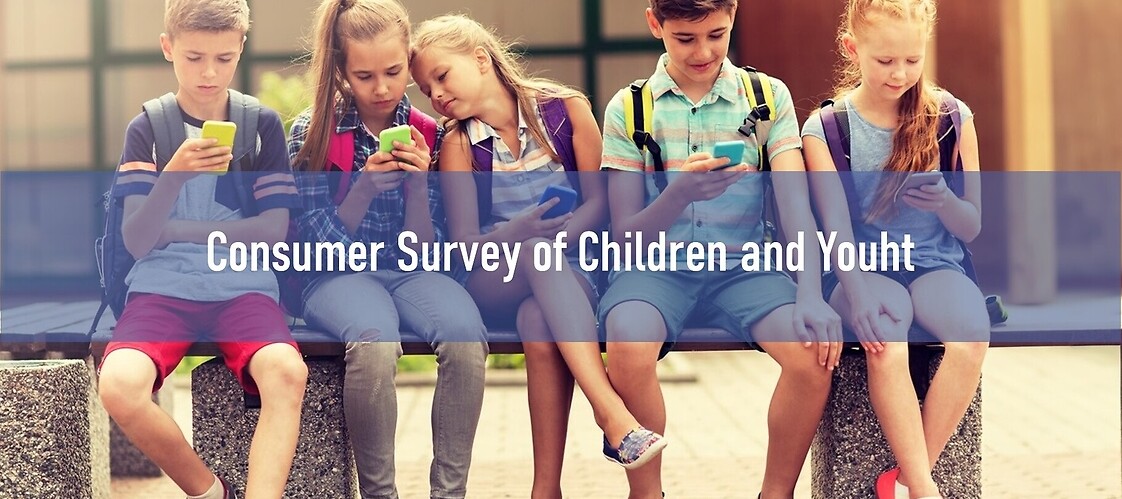
Consumer Survey of Children and Youth
10 february 2026
The Office of Electronic Communications (UKE) has conducted a Consumer Survey of Children and Youth, covering individuals aged 7 to 17. The study illustrates how young users utilize electronic communication services.
While using the internet, young users are exposed to cyberbullying, phishing, contact with age-inappropriate content, and many other threats. This is why online safety education is so crucial. The research highlights what needs attention and identifies the specific needs in this area.
Personal Phones and Internet Access
The vast majority of children own their own mobile phone, and nearly all of them (97.3%) have internet access on it. The phone has become the primary device—used by 74.2% of children—while other devices, such as computers or tablets, play a secondary role. Children are starting to use the internet at an increasingly younger age. The most frequently cited age is 7–8 (25.6%), but a nearly as large group begins using the internet as early as 5–6 years old (24.6%). Such early exposure to digital devices and content raises questions about the role and responsibility of adults in this process.
The UKE study shows that only one in four children surveyed (25.8%) had any restrictions regarding time spent online. Simultaneously, as many as 63.4% of children use the web for more than 3 hours a day, and 43.2% declare online activity after 10:00 PM.
Communication, Entertainment, and Social Media
The most frequent online activities are social and entertainment-oriented. The internet is primarily used for chatting with others (87%), listening to music (78.4%), using social media (75.4%), and watching movies or videos (74.2%). Additionally, almost half of the children (45.2%) use paid online services, and one in three does so frequently or very frequently. It should be noted that 55% of surveyed children have accounts on applications intended for older users, and 66.4% admitted to providing a false birth date at least once to create an account or access a website.
The most popular services among children and youth are YouTube (84.8%) and Instagram (76%). Over 60% also use TikTok, WhatsApp, and Facebook. Most respondents have more than one social media account—48.6% have accounts on multiple platforms, often creating extras to separate different friend groups or activities. Furthermore, 27.6% use anonymous accounts solely to browse or comment on content.
Parents
Although 64.4% of children claim to talk to their parents about online safety, constant parental control applies to only 24% of those surveyed. The vast majority of children (85.6%) install applications on their phones independently—in the 15–17 age group, this figure reaches 95%. Only 33% of children have clearly defined house rules regarding internet or social media use, while more than half (53.4%) have no restrictions at all.
Digital Addiction
The data regarding digital well-being is highly concerning. 12% of children feel stress or anxiety when they lack internet access, and 44% feel cut off from the world in such situations. As many as 77.8% admit that despite feeling they are wasting time online, they are unable to log off. The average level of internet addiction, as assessed by the children themselves, is highest in the 7–9 age group, indicating the particular vulnerability of the youngest users.
Hate Speech and Negative Online Phenomena
- 56.8% of children admit to experiencing hate speech or negative comments on social media; 24% have experienced it repeatedly.
- Every fourth child admitted to responding to hate with hate (25.7%), and 24.2% do not know who to turn to if they encounter online violence.
- 27.8% of children confirmed they watch "patostreaming" (harmful/dysfunctional content), and 34.5% of those viewers have paid for access at least once.
- Among those aged 13–17, 34.5% have an OnlyFans account, and 11.5% have used dating sites for minors.
- 15.3% of children aged 10-17 have sent a nude or semi-nude photo of themselves at least once. One in three (33.6%) has been encouraged to send intimate photos or recordings.
- 29% of children aged 10-17 received an intimate photo of another person, and over half of them did not consent to it.
- 8.7% of those aged 10-17 were personally blackmailed with the threat of revealing intimate photos, and another 7.7% encountered this problem among their friends.
Experiencing hate usually leads to stress, loneliness, and lower self-esteem. Responding to hate with hate shows that children often do not know how to handle online aggression. Exposure to patostreaming or adult platforms can affect perceptions of human relationships and social norms, as well as emotional and sexual development. Being pressured to send nude photos or facing blackmail constitutes a serious emotional and psychological threat.
The study also covered personal data protection, phishing, and the use of Artificial Intelligence tools by children and youth.
We encourage you to read the full results of the study so that you can better help the younger generation ensure that I click sensibly.
